How we turn additive concepts into real-world products
All (11)
E-PBF fundamentals
Orthopedic implants
Industrial titanium
Design guidelines
Materials and validation
Molded fiber tooling
Archive
Browse by category

E-PBF fundamentals
What is E-PBF (electron beam powder bed fusion)?
E-PBF (electron beam powder bed fusion) is a metal additive manufacturing process in which an electron beam melts metal powder layer by layer, in vacuum, inside a powder bed held at around 700 °C.

Design guidelines
What feature sizes can E-PBF achieve in titanium?
On AIM’s Spectra L, E-PBF (electron beam powder bed fusion, also known as EBM) builds Ti6Al4V lattice struts down to 0.35 mm, solid walls down to 0.73 mm and gaps down to 0.4 mm, as built.

E-PBF fundamentals
How long has AIM worked with point melt?
AIM has worked on point melting for E-PBF (electron beam powder bed fusion, also known as EBM) in Ti6Al4V since 2019, years before point melt became a standard feature in commercial machine software.

Industrial titanium
Can closed impellers be made with E-PBF?
Yes.

Orthopedic implants
E-PBF vs L-PBF for orthopedic implants: how do they compare?
Both E-PBF (electron beam powder bed fusion, also known as EBM) and L-PBF (laser powder bed fusion) produce titanium implants that meet the same material standards, ASTM F2924 and ASTM F3001.

Materials and validation
What mechanical properties does E-PBF Ti6Al4V have?
Ti6Al4V built with E-PBF (electron beam powder bed fusion, also known as EBM) meets the ASTM F2924 and ASTM F3001 requirements straight from the machine, with no heat treatment.

E-PBF fundamentals
Supports in E-PBF: a choice, not a requirement
In E-PBF (electron beam powder bed fusion, also known as EBM), the sintered powder cake carries the part, so supports are never needed to hold it in place.

Molded fiber tooling
When is FreeFlow® a suitable tooling solution for molded fiber?
FreeFlow® is a titanium forming screen for molded fiber, built with E-PBF (electron beam powder bed fusion) instead of from wire mesh.
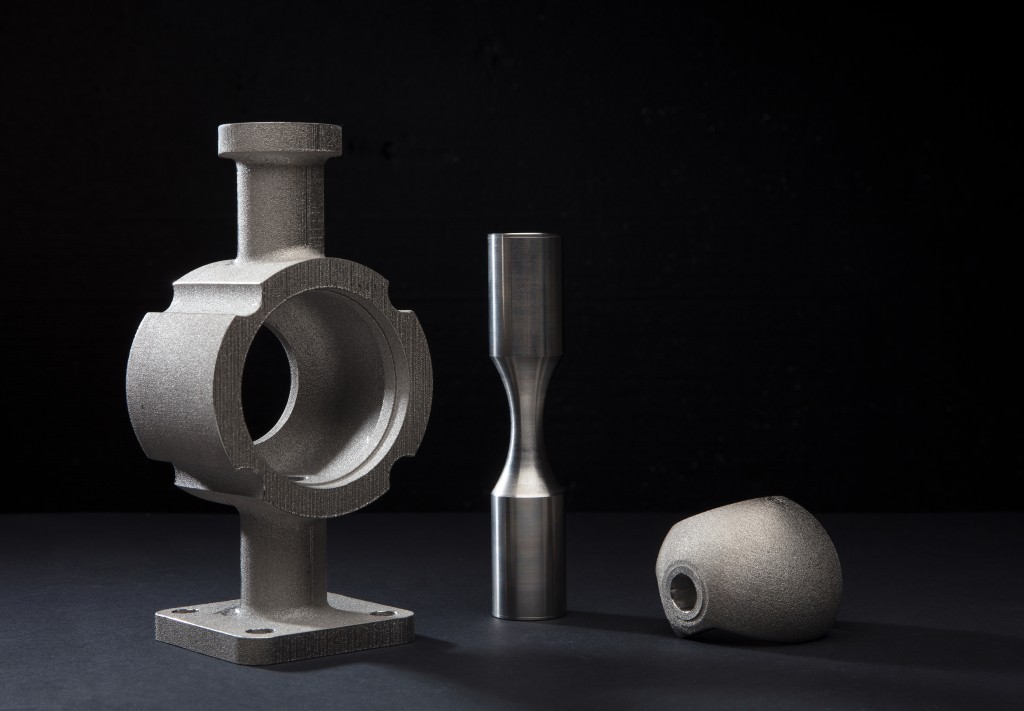
Industrial titanium
E-PBF vs L-PBF for industrial titanium parts: which fits your part?
For industrial titanium parts, the choice between E-PBF (electron beam powder bed fusion, also known as EBM) and L-PBF (laser powder bed fusion) comes down to the geometry.

E-PBF fundamentals
What is point melt, and when can a part be built without supports?
Point melt is a way of melting each layer in E-PBF (electron beam powder bed fusion, also known as EBM) where the electron beam fuses the powder point by point instead of in continuous lines.

Orthopedic implants
How to design lattice and trabecular structures for E-PBF
E-PBF (electron beam powder bed fusion, also known as EBM) builds open lattice and trabecular structures in Ti6Al4V with struts down to 0.4 mm with the 70 µm parameters (line melt) and 0.35 mm with the 50 µm parameters (point melt).
E-PBF fundamentals
What is E-PBF (electron beam powder bed fusion)?
E-PBF (electron beam powder bed fusion) is a metal additive manufacturing process in which an electron beam melts metal powder layer by layer, in vacuum, inside a powder bed held at around 700 °C.
Orthopedic implants
E-PBF vs L-PBF for orthopedic implants: how do they compare?
Both E-PBF (electron beam powder bed fusion, also known as EBM) and L-PBF (laser powder bed fusion) produce titanium implants that meet the same material standards, ASTM F2924 and ASTM F3001.
Industrial titanium
E-PBF vs L-PBF for industrial titanium parts: which fits your part?
For industrial titanium parts, the choice between E-PBF (electron beam powder bed fusion, also known as EBM) and L-PBF (laser powder bed fusion) comes down to the geometry.
Design guidelines
What feature sizes can E-PBF achieve in titanium?
On AIM’s Spectra L, E-PBF (electron beam powder bed fusion, also known as EBM) builds Ti6Al4V lattice struts down to 0.35 mm, solid walls down to 0.73 mm and gaps down to 0.4 mm, as built.
Materials and validation
What mechanical properties does E-PBF Ti6Al4V have?
Ti6Al4V built with E-PBF (electron beam powder bed fusion, also known as EBM) meets the ASTM F2924 and ASTM F3001 requirements straight from the machine, with no heat treatment.
E-PBF fundamentals
What is point melt, and when can a part be built without supports?
Point melt is a way of melting each layer in E-PBF (electron beam powder bed fusion, also known as EBM) where the electron beam fuses the powder point by point instead of in continuous lines.
E-PBF fundamentals
How long has AIM worked with point melt?
AIM has worked on point melting for E-PBF (electron beam powder bed fusion, also known as EBM) in Ti6Al4V since 2019, years before point melt became a standard feature in commercial machine software.
E-PBF fundamentals
Supports in E-PBF: a choice, not a requirement
In E-PBF (electron beam powder bed fusion, also known as EBM), the sintered powder cake carries the part, so supports are never needed to hold it in place.
Orthopedic implants
How to design lattice and trabecular structures for E-PBF
E-PBF (electron beam powder bed fusion, also known as EBM) builds open lattice and trabecular structures in Ti6Al4V with struts down to 0.4 mm with the 70 µm parameters (line melt) and 0.35 mm with the 50 µm parameters (point melt).
Industrial titanium
Can closed impellers be made with E-PBF?
Yes.
Molded fiber tooling
When is FreeFlow® a suitable tooling solution for molded fiber?
FreeFlow® is a titanium forming screen for molded fiber, built with E-PBF (electron beam powder bed fusion) instead of from wire mesh.
E-PBF fundamentals
What is E-PBF (electron beam powder bed fusion)?
E-PBF (electron beam powder bed fusion) is a metal additive manufacturing process in which an electron beam melts metal powder layer by layer, in vacuum, inside a powder bed held at around 700 °C.
Industrial titanium
E-PBF vs L-PBF for industrial titanium parts: which fits your part?
For industrial titanium parts, the choice between E-PBF (electron beam powder bed fusion, also known as EBM) and L-PBF (laser powder bed fusion) comes down to the geometry.
Materials and validation
What mechanical properties does E-PBF Ti6Al4V have?
Ti6Al4V built with E-PBF (electron beam powder bed fusion, also known as EBM) meets the ASTM F2924 and ASTM F3001 requirements straight from the machine, with no heat treatment.
E-PBF fundamentals
How long has AIM worked with point melt?
AIM has worked on point melting for E-PBF (electron beam powder bed fusion, also known as EBM) in Ti6Al4V since 2019, years before point melt became a standard feature in commercial machine software.
Orthopedic implants
How to design lattice and trabecular structures for E-PBF
E-PBF (electron beam powder bed fusion, also known as EBM) builds open lattice and trabecular structures in Ti6Al4V with struts down to 0.4 mm with the 70 µm parameters (line melt) and 0.35 mm with the 50 µm parameters (point melt).
Molded fiber tooling
When is FreeFlow® a suitable tooling solution for molded fiber?
FreeFlow® is a titanium forming screen for molded fiber, built with E-PBF (electron beam powder bed fusion) instead of from wire mesh.
Orthopedic implants
E-PBF vs L-PBF for orthopedic implants: how do they compare?
Both E-PBF (electron beam powder bed fusion, also known as EBM) and L-PBF (laser powder bed fusion) produce titanium implants that meet the same material standards, ASTM F2924 and ASTM F3001.
Design guidelines
What feature sizes can E-PBF achieve in titanium?
On AIM’s Spectra L, E-PBF (electron beam powder bed fusion, also known as EBM) builds Ti6Al4V lattice struts down to 0.35 mm, solid walls down to 0.73 mm and gaps down to 0.4 mm, as built.
E-PBF fundamentals
What is point melt, and when can a part be built without supports?
Point melt is a way of melting each layer in E-PBF (electron beam powder bed fusion, also known as EBM) where the electron beam fuses the powder point by point instead of in continuous lines.
E-PBF fundamentals
Supports in E-PBF: a choice, not a requirement
In E-PBF (electron beam powder bed fusion, also known as EBM), the sintered powder cake carries the part, so supports are never needed to hold it in place.
Industrial titanium
Can closed impellers be made with E-PBF?
Yes.

Lägervägen 13
Byggnad 9
SE-832 56 Frösön
Sweden
Phone: +46 63 554 10 35
Email: info@aimsweden.com